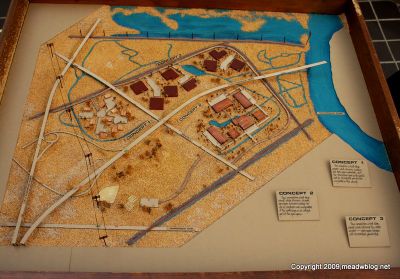
Back when wetlands were just swamps….

IMG_3631
   This 32-year-old diorama, found in the Kearny Library attic, showed how part of the Kearny brackish marsh could be converted to office parks.
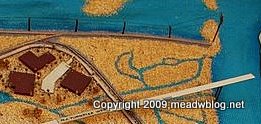
   IMG_3631-2 In the photo at left, you can see where the eastern spur of the Turnpike crosses the Hackensack River.

The office park (and one to the west)  would have been placed on filled wetlands next to a railroad siding near the river.
      
    This was in the waning days of an era where planners thought wetlands were swamps, to be filled and developed.

     These days, almost everyone understands that marshes are vital parts of the eco-system, providing everything from wildlife habitat and the filtering of impurities in water to flood control.

     More on the value of the Meadowlands' marshes here.

    (Thanks to the Kearny Public Library for passing along the diorama.)
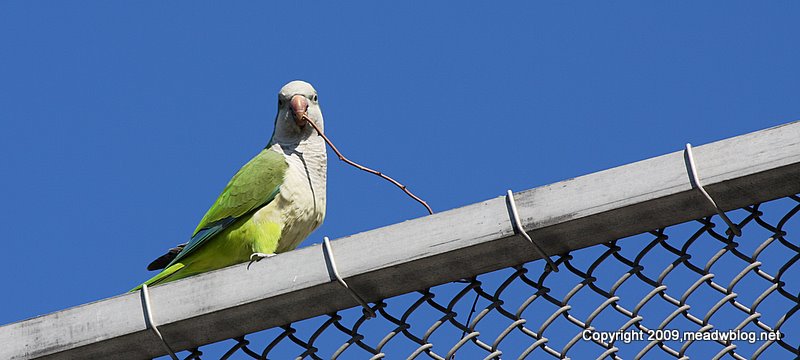
Monk Parakeets in the News

  Monk parakeet

    A bit of news regarding the Monk Parakeets of Ridgefield.
     Bill Boyle of  the New Jersey Bird Records Committee reports:
    "At the Spring 2008 meeting [last month], the committee voted to add Monk Parakeet to the New Jersey State List. The population in Bergen County, which has been present for many years, has been growing and spreading and is unlikely to be extirpated by natural causes."

   Click "Continue reading…" for the rest of his comments.

Continue reading

DeKorte Park is in its spring finery

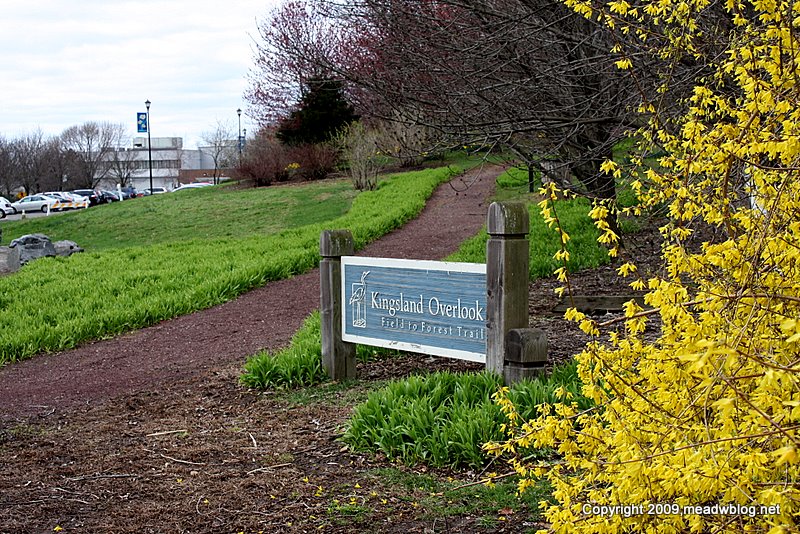
Kingsland overlook
   If you are looking  for a great place for a spring walk, look no farther than DeKorte Park, which isIMG_3263 just starting to burst with blooms.
  Above is the start of the Kingsland Overlook Trail just inside the main gate, including the forsythias.

    On the left is a close-up of crocuses one of the many gardens that are coming to life.

   (Almost forgot — there are plenty of great birds arrriving as well!)
   The trails at DeKorte are open from dawn to dusk. The observatory is open to the public from 8 to 10 p.m. on Mondays and Wednesdays.

   Click "Continue reading …" for more photos.

Continue reading

The Snowys are gone, the Snowys are here…

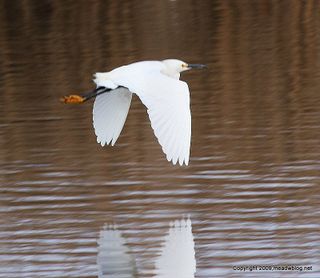
Snowy egret    We have been looking for the Snowy Owls in Lyndhurst this week to no avail. Last sighting was March 28. But the Snowy Egrets have arrived. 

    This guy was photographed late yesterday at DeKorte.  And birder Ray Duffy saw oneat Mill Creek Marsh in Secaucus on Friday.

   More on Snowy Egrets (and their nifty yellow/orange feet) here.

Harrier Meadow Walk 040309

IMG_0029


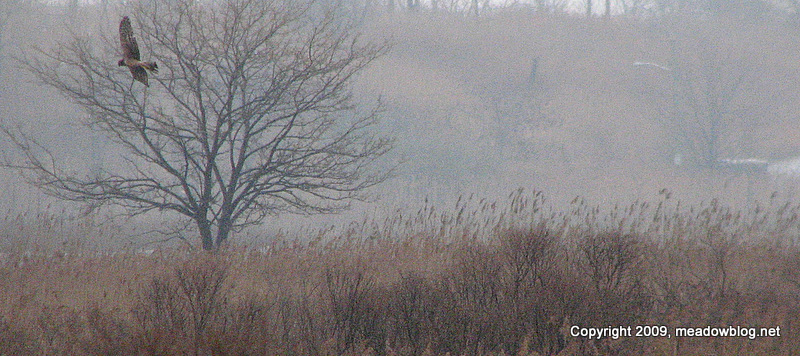
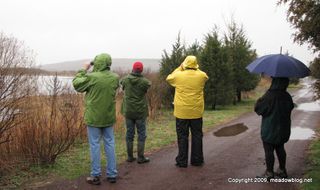
    Despite a persiIMG_0019stent rain, the Harrier Meadow nature walk on Friday attracted three hardy  birders, 28 species of birds and plenty of earthworms soaking up the gloom.

   No Harrier walk would be complete without a Northern Harrier (above).
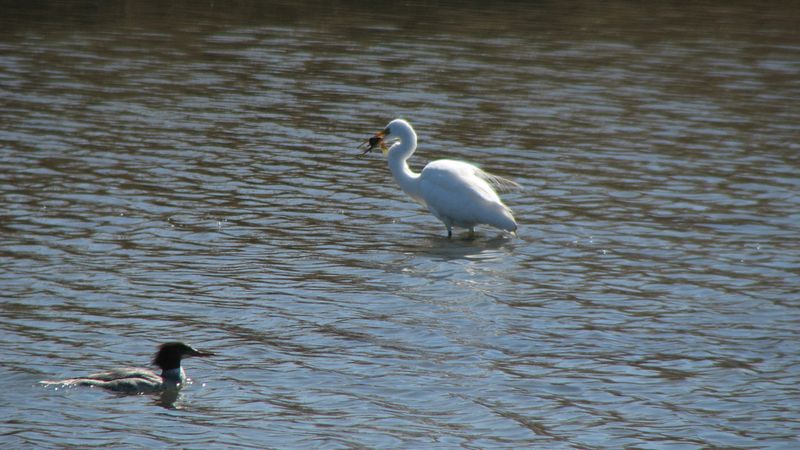
     Over 90 minutes, we saw our first Barn Swallow of the year, our first Eastern Phoebe, several Great Egrets, a Great Blue Heron, and a multitude of (way too skittish) ducks.
    Click "Continue reading …" for the complete list.

Continue reading

Harrier Walk: Species of the Day

IMG_0046-2
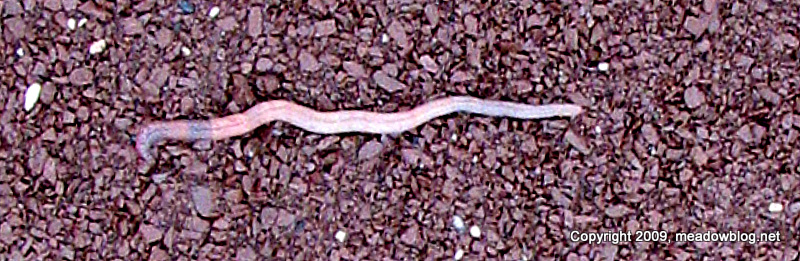
   We got a rare view of this down-to-earth creature  on the path at Harrier Meadow during our (rainy) Walk of the Month this morning.
   An American Robin was wetting his whistle nearby.
   Three brave souls joined us for the 90-minute walk. They were rewarded with excellent views of dozens of worms  and 28 bird species, including: Ring-necked Duck, Northern Harrier, Eastern Phoebe, and Barn Swallow.

   Look for a full (wormless) report on Friday's walk on this blog early next week.

   More on Earthworms here.
  

Tree Swallows Are Back — and Nest Boxes Are Going Up

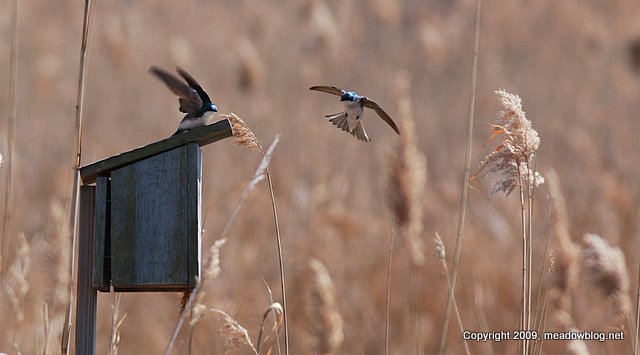
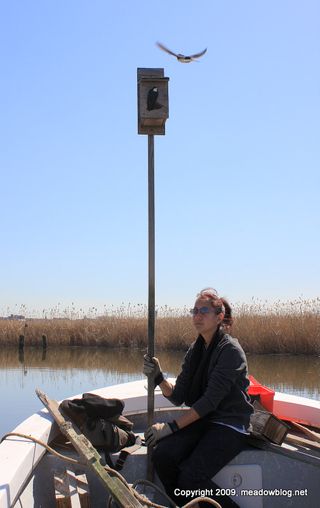
IMG_3125  The New Jersey Meadowlands Commission has begun its annual nesting box program for tree swallows this week, and the beautiful iridescent-blue birds are grabbing up the boxes as soon as they are placed along the edge of wetlands.

   In some instances (see photo at right), Tree swallow box the birds have flown into the nesting boxes while the boxes were still on the boat.

     Tree swallows are a popular bird for many people, not just for their iridescent beauty and graceful speed, but also because they love to eat insects.  It has been estimated that a family of tree swallows can eat hundreds upon hundreds of midges, mosquitoes and other insects in a day. 

     With the help of local scout troops, families and other groups, the Meadowlands Commission has erected some 250 nesting boxes in marshes throughout the 30.4-square-mile district.

    Last year, Meadowlands Commission naturalists used GPS devices to help keep track of tree-swallow activity in all of the nesting boxes.

COMING SOON: Tree Swallow Video

   Click here to read Bergen Record Environmental Writer Jim O'Neill's nifty story today about the Tree Swallow Project.

   "Continue reading…" for more info and pics.


Continue reading